
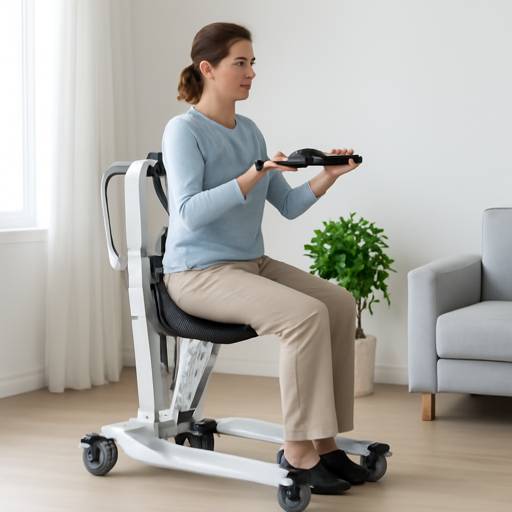
Mastering Mobility: The Transformative Power of the Electric Sit to Stand Lift
For millions of individuals recovering from surgery, living with chronic weakness, or navigating the challenges of aging, the simple act of standing up can become a monumental task. This fundamental movement is often the gateway to independence, dignity, and social interaction. Traditional manual transfers place immense strain on caregivers and pose significant safety risks for patients. Enter the modern solution: the electric sit to stand lift. This device represents a paradigm shift in patient handling, merging advanced technology with ergonomic design to facilitate safer, more dignified transfers. Unlike full-sling lifts that require complete immobilization, these lifts empower patients to participate actively in their transfer, leveraging their own weight-bearing capacity. The result is a transfer that is not only safer for the care team but also psychologically reinforcing for the patient, who retains a sense of agency over their body. Understanding the mechanics, benefits, and applications of this equipment is essential for anyone involved in home care, long-term care, or rehabilitation settings.
How an Electric Sit to Stand Lift Reimagines Patient Transfer
The core engineering of an electric sit to stand lift is a masterclass in applied biomechanics. The device typically consists of a sturdy base platform, a vertical mast, and a specialized sling or harness system that supports the patient's back and thighs. The critical difference from a standard patient lift lies in its function. Instead of lifting a patient wholly off a surface, the electric sit to stand lift assists a patient who can bear some weight on their legs. The user sits on a small seat or pad, with their feet flat on a footplate. A motorized actuator slowly raises the mast, which in turn lifts the seat and guides the patient into a standing posture. This motion mirrors the natural biomechanics of rising from a chair, ensuring that the joints and muscles are engaged correctly.
The electric actuation is what truly sets this category apart. Manual sit-to-stand lifts require the caregiver to pump a hydraulic lever, which is physically demanding and can lead to inconsistent transfer speeds. An electric model offers smooth, continuous, and controlled motion at the touch of a button. This precision is crucial for patients with fragile skin, contractures, or acute pain, as jerky movements can cause distress or injury. Furthermore, the electrical system allows for programmable speeds and heights, enabling a customized experience for each patient. The robust build quality of these lifts also contributes to stability. Many models feature a widening base that provides a low center of gravity during the lift phase, preventing tipping even when a patient shifts their weight unexpectedly. The integration of high-torque motors ensures that the lift can handle the required weight capacity without hesitation, making the process feel effortless for both the patient and the caregiver. By standardizing the transfer motion and removing the variable of human strength, the electric sit to stand lift fundamentally reduces the risk of falls, back injuries, and patient distress during transitions.
Clinical Advantages and Real-World Impact on Caregiver Health
The adoption of an electric sit to stand lift extends far beyond mere convenience; it represents a critical investment in occupational health and patient outcomes. From a clinical perspective, the device is instrumental in preventing musculoskeletal disorders, which are the leading cause of caregiver injury in hospitals and nursing homes. Manual patient handling, especially repetitive lifting and twisting, places incredible stress on the lumbar spine, shoulders, and knees. The use of a mechanical lift virtually eliminates this risk, allowing caregivers to guide the transfer rather than power it. This shift from "manual lifting" to "mechanical guidance" has been proven to reduce lost workdays, worker's compensation claims, and chronic pain among healthcare staff. For the patient, the benefits are equally profound. Active participation in the transfer helps maintain muscle tone, improves circulation, and reduces the risk of pressure ulcers that develop from prolonged sitting or lying down.
Consider a typical scenario in a long-term care facility. A resident with moderate Parkinson's disease needs to use the toilet. Without a lift, this task often requires two caregivers to perform a "two-person pivot," a maneuver fraught with risk of falls and shoulder strains. With an electric sit to stand lift, one caregiver positions the device, the resident places their feet on the plate, and with a gentle press of a button, they are guided to a stable standing position. The patient feels the floor, engages their core, and maintains dignity. This is not a hypothetical benefit; case studies from rehabilitation centers show that patients using sit-to-stand lifts experience a 40% faster return to independent ambulation compared to those transferred manually. The psychological boost from being an active participant—rather than a passive object being moved—cannot be overstated. It fosters confidence and motivation, which are key drivers in any recovery journey. Furthermore, the technology integrates seamlessly with modern care protocols. Many lifts now include digital scales for weight monitoring during the transfer, providing clinicians with valuable data without adding extra steps to the routine. By unifying safety, dignity, and data collection, the electric sit to stand lift has become an indispensable tool for modern patient care.
Real-World Applications: From Home Care to Intensive Rehab Environments
The versatility of the electric sit to stand lift makes it applicable across a wide spectrum of care settings, from private homes to highly specialized rehabilitation gyms. In the home care environment, these lifts are a godsend for family caregivers who are often untrained in proper lifting techniques. A spouse caring for a partner after a hip replacement can use the lift to manage transfers from the bed to a wheelchair or the commode, avoiding a potentially catastrophic fall for the patient and a debilitating back spasm for the caregiver. The electric mechanism removes the guesswork and physical strain, allowing the family member to focus on providing emotional support rather than struggling with manual labor. The compact footprint of many modern models also makes them suitable for tight residential spaces, fitting easily beside a bed or a favorite armchair.
In acute rehabilitation and skilled nursing facilities, the use case expands. Therapists utilize the lift not just for transfers, but as a therapeutic tool. By adjusting the lift angle and speed, they can progressively challenge a patient's standing balance and quadriceps strength. The device becomes a safe scaffold for gait training, allowing the patient to practice stepping without the fear of falling. This mechanized support is far superior to a manual belt because it provides a consistent, unyielding resistance point if the patient stumbles. A notable case study involves a spinal cord injury rehabilitation unit that integrated electric sit-to-stand lifts into their daily rounds. They observed a marked reduction in urinary tract infections because patients could be transferred to the toilet more frequently and with less physical exertion, encouraging better bladder management. Many facilities now rely on an electric sit to stand lift to standardize their "safe patient handling" protocols, creating a culture of safety that protects both residents and staff. The technology also supports bariatric care, with heavy-duty models capable of handling over 600 pounds, ensuring that every individual has access to safe, dignified mobility assistance. The integration of these lifts into daily workflow has been shown to decrease facility fall rates by as much as 30%, proving that the right tool not only changes an individual transfer but transforms the entire care environment.
