
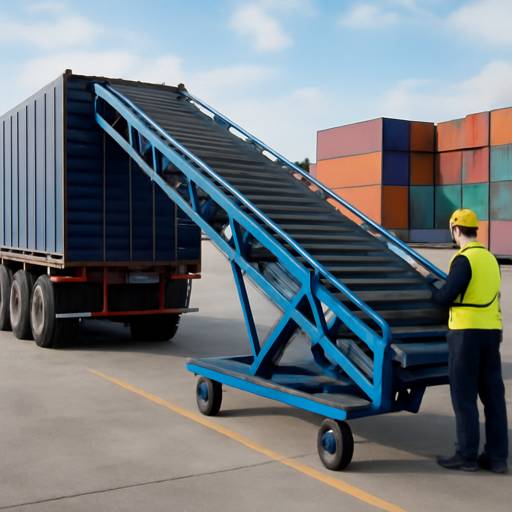
Efficiency on the Dock: Why a Modern Loading Conveyor Is the Backbone of Fast, Safe Throughput
What Is a Loading Conveyor? Core Functions, Types, and Measurable Benefits
A loading conveyor is a specialized conveyor system engineered to move parcels, cartons, pallets, or bulk materials between a warehouse or production line and a vehicle at the dock. Unlike fixed in-plant conveyors, these units are designed for dynamic, end-of-line duty—bridging gaps, changing elevations, and dealing with nonstandard truck positions. The goal is straightforward: shorten loading/unloading cycles, reduce manual handling, and prevent congestion at the bay doors, where every minute saved compounds into higher daily throughput.
There are several common types. Telescopic belt conveyors extend deep into trailers, eliminating the “walk” time for staff. Flexible conveyors (gravity or powered) snake around obstacles and are easily reconfigured, ideal for parcel sortation and seasonal peaks. Mobile conveyors roll between doors to support multiple routes without major infrastructure changes. For heavier loads, chain-driven live roller and roller bed designs carry totes or pallets at controlled speeds. Each format brings unique benefits, but all share the same mission: to make the dock smarter, safer, and faster.
The business case is clear. By replacing manual carry-and-stack with an engineered loading conveyor, facilities typically cut truck dwell time, improve trailer cube utilization, and slash injury risk from lifting and twisting. In express delivery hubs, shaving even 60–120 seconds per pallet or cage can translate into dozens more dispatches per shift. In cross-border logistics, where customs windows and carrier handoffs are tight, predictable loading cycles reduce missed connections and keep service-level agreements intact. Warehouses gain a steadier cadence at the dock, freeing upstream lines from stop-and-go surges and improving the overall rhythm of material flow.
Another advantage is agility. Seasonal spikes in e-commerce demand require rapid scaling without compromising safety. A modern loading conveyor allows teams to flex capacity quickly, aligning labor with the actual volume while maintaining ergonomic best practices. As a result, facilities achieve more with the same floor space, enabling higher density of operations while keeping aisles clear for forklifts, AMRs, and pedestrian traffic.
Design and Technology: Building a Safer, Smarter Loading Conveyor
Engineering a high-performance loading conveyor begins with an understanding of the product mix. Parcel hubs need tight transfer points and low-friction surfaces to minimize jams on polybags and small boxes. Pallet and tote operations emphasize load rating, roller spacing, and drive selection. Belt materials range from PVC for general goods to antistatic compounds for electronics. Adjustable heights, articulating booms, and telescoping sections adapt to varying trailer floors, while side guards and integrated lighting improve visibility inside dark containers. These seemingly small choices are decisive: they shape uptime, worker comfort, and damage rates.
Safety is nonnegotiable. Emergency stop cords, interlocked gates, start-up alarms, and photoelectric presence detection are table stakes. But the modern conveyor system goes further: torque-limited drives protect against pinch points; soft starts prevent load surges; speed controls allow operators to match pace to comfort and skill level. Clear line-of-sight operator stations reduce confusion at shift change, and color-coded indicators keep teams aligned on conveyor status. For facilities deploying mobile units, robust wheel locks and dock edge protection are essential to stability and compliance.
Smart automation elevates performance. Variable frequency drives tune speed curves for different SKUs. Sensor arrays count, space, and track items to keep flow consistent and prevent pileups at merge points. Integrations with WMS, TMS, and yard management systems sync door assignments with live carrier ETAs, smoothing handoffs between inbound staging and outbound dispatch. In data-rich operations, IoT modules stream real-time telemetry—motor temperature, run hours, energy draw—into dashboards that flag anomalies before they become breakdowns. Predictive maintenance, guided by vibration and current signatures, helps teams service gear during natural lulls, not during crunch time.
Energy efficiency also matters. High-efficiency motors and regenerative braking, paired with auto-sleep modes, lower operating costs without sacrificing performance. Modular frames and standardized spares shorten lead times and reduce lifetime inventory. For multi-site logistics networks, a shared platform across facilities allows consistent training, faster technician onboarding, and simplified compliance. This platform mindset is especially valuable in fast-growing regions and cross-border corridors, where harmonized equipment supports rapid expansion while keeping total cost of ownership in check.
Real-World Applications and ROI: From Express Parcels to Cross-Border Warehousing
In express delivery, parcels arrive in waves. Without a disciplined flow at the dock, crews waste steps retrieving items, stacking, then restacking as routing priorities change. With a dedicated loading conveyor, parcels ride directly from chutes to the trailer floor, with extendable booms placing the work-front exactly where operators need it. One regional parcel hub reported reducing average trailer load time by 18% after deploying telescopic units at five doors; the savings translated into earlier departures, fewer overtime hours, and improved on-time performance across the route network.
Manufacturers shipping outbound to distributors face different pain points. Palletized goods require stable transfer and level transitions between dock plates and truck beds. A robust roller or chain-driven solution, synchronized with pallet wrappers and labelers, ensures loads move steadily and error-free. In these environments, ROI comes from decreased forklift travel, less product damage at the threshold, and higher consistency in trailer weight distribution. A mid-sized appliance producer documented a 30% reduction in forklift trips per trailer after integrating powered roller conveyors with staging buffers—a dual win for safety and fuel consumption.
Cross-border logistics puts a premium on predictability. When goods must clear customs or hit a port cutoff, delays at the loading door ripple into demurrage and rebooking fees. Facilities along busy trade corridors often pair mobile loading conveyor units with reconfigurable staging lanes to pivot quickly between carriers and equipment types. The outcome is a smoother cadence of handoffs, better compliance with slot times, and less idle dwell for trucks. Even incremental gains—like cutting five minutes per container—can compound over hundreds of loads per week, freeing dock capacity and preserving carrier relationships.
Practical deployment tips help lock in results. Start with a time-and-motion study to baseline current dock performance, capturing walk distances, touches per carton, and queue times. Specify load characteristics carefully—dimensions, weights, surfaces, and packaging—to choose the right belt or roller. Plan for the whole lifecycle: spare parts strategy, operator training, and a preventive maintenance calendar mapped to peak seasons. Build in ergonomics: adjustable heights, anti-fatigue mats, and clear lighting reduce strain and errors. Finally, design for scalability. Seasonal surges in e-commerce can be met with additional flexible conveyors or longer telescopic booms, ensuring the system grows with demand rather than becoming a bottleneck. In every scenario—from high-velocity parcel hubs to mixed-SKU warehouses—the right loading conveyor transforms dock doors into high-throughput assets, aligning people, process, and technology for sustained operational advantage.
